Offpunk Manifesto
from Ideias de Chirico

The revolution will not be digitized.
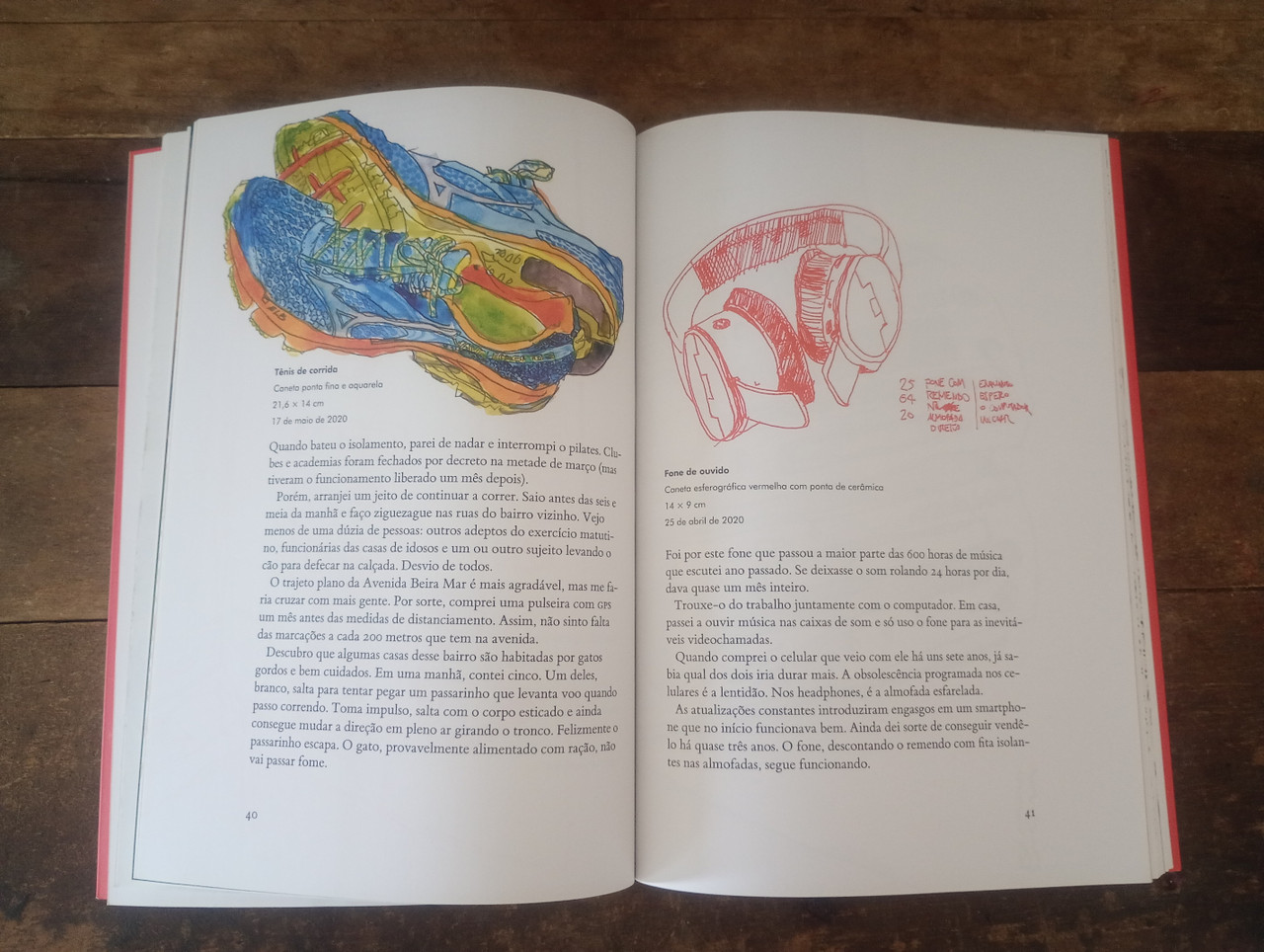
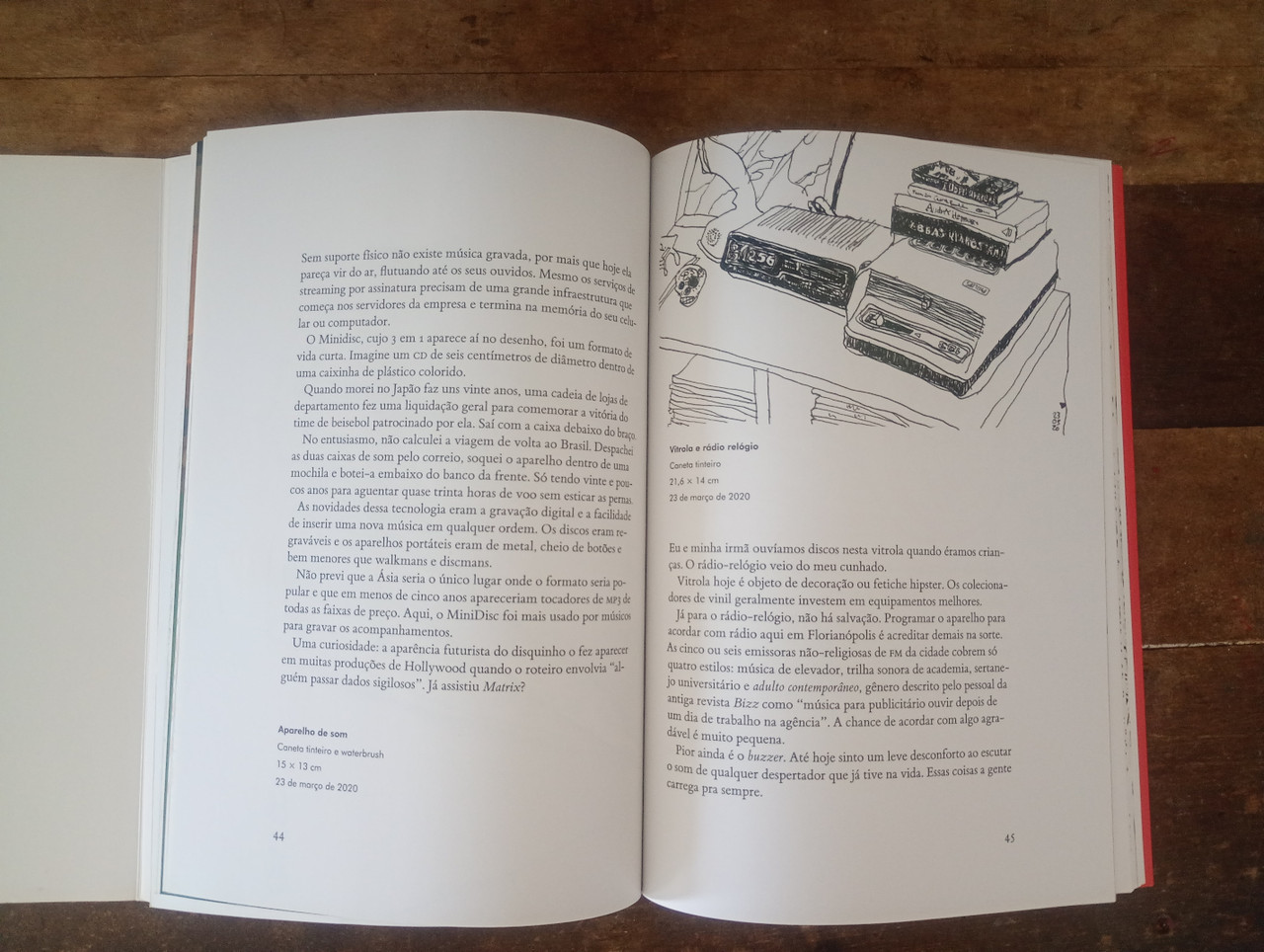
At a time when hyper-connectivity is pointed to as a symptom of an inescapable future, a shy and uncomfortable movement is insinuating itself: that of purposeful and intentional disconnection. The adoption of “dumb phones” has grown in recent years. Digital cameras are being used again. As are cassette tapes. And also typewriters... There is also a movement towards adopting the newspaper. Even the minidisc, forgotten because of the mp3 player, has risen from the ashes.
At the beginning of the century, the internet was the promise of the final act of the “Global Village,” advocated by Marshall McLuhan. Computers, expensive and scarce (hence, sometimes communal), were portals to an otherworld. Governments, spending considerable sums, sought to ensure that poor classes were digitally “included.”
We got there. We are now heading towards the mark of three connected devices per person worldwide, according to Cisco Visual Network Index estimates for the 2020s.
The digital is ubiquitous and taken for granted. Included digitally whether we like it or not, we no longer connect to the internet. We simply live in it.
As if wearing a uniform, we keep our phones in our pockets to work, to live, to love.
Digital technology has ceased to be a tool and has become an environment — an environment from which one cannot escape. That is, a prison.
“Ensuring the non-digital is a duty, not a return to the past,” Giulio Cavalli.
In this scenario of compulsory, sometimes unnecessary, connectivity, true dissent isn't bypassing the system — it's simply refusing to be part of it.
As the belgian sci-fi writer and software developer Ploum argues, the “punks” of our era are those who dare to live without a smartphone — or “offpunks,” as I now prefer to call them.
Connection as a Weapon of War
The result of centralized, monopolistic technological development, the distribution of internet or digital services has become a weapon of war. When countries with “hard power” enter conflict, they seek to disrupt not only water and gas supplies — they cut off the internet as a wartime tactic. Russia did so in offensives against Ukraine; Israel does so within Palestine.
At the end of 2025, French judge Nicolas Guillou of the International Criminal Court lost all access to several American digital services — such as hosting, online shopping, and banking — provided by American companies like Airbnb, Amazon, and PayPal. The United States justified this sanction because Guillou issued arrest warrants against Israeli Prime Minister Benjamin Netanyahu and his Defense Minister Yoav Gallant, due to Israeli attacks of a genocidal nature in Palestinian territory. The United States is the main country supporting Israel's actions in Central Asia.
The offpunk stance is born from a simple and uncomfortable observation: the digital realm is fragile. At the same time, all social life is forcibly embedded within this environment. Therefore, this stance takes into account that one must not depend entirely on virtual services, at the risk of one of them being sanctioned or becoming unavailable. Examples like the Microsoft server outage that impacted banking services worldwide in mid-2024, the sanction of Twitter/X by the Brazilian government in late 2024, and the global outage of Amazon and Cloudflare servers in late 2025, which took down numerous domains on the internet, laid bare not only its fragility but also our dependence on these services.
When the system goes down — due to political sanction, outage, or war — what exists online simply evaporates. You are left helpless if your only option is digital.
After all, uninterrupted connection is not a guarantee, especially in countries of the global South or those under internal or external political conflict, or even in peace situation ― in the city of São Paulo, Brasil, due to its policy of outsourcing its energy supply from Italy, there are frequent power outages on rainy days. In these countries, one must always count on analog as a Plan B.
Digital Minimalism and Offpunk
It's important not to confuse “offpunk” with digital minimalism.
Digital minimalism is a liberal approach to disconnection, entirely focused on individual agency, without criticizing power structures.
Since a peaceful offline life is not possible, it strips away all immersive (or “addictive”) digital elements from it, in order to configure connected environments to be simulacra of an analog life. Off, ma non troppo.
What we truly need is the possibility of total disconnection; the right of going around without the needing of carrying the newest smartphone and being available for 24/7 communication.
Trine Syvertsen demonstrates very well in her “Digital Detox: The Politics of Disconnecting” (2020) how digital minimalism participates in a neoliberal agenda of shifting the responsibility for solving structural problems (previously the purview of collective institutions) onto ordinary individuals — an average user of a modern phone. Furthermore, the author identifies that the reason people seek this type of detox can be summarized by three P's: presence, productivity, and privacy — all individual agendas.
In other words, if you miss moments of socialization because of your phone, if you don't produce at work or on personal projects due to notifications, or if you're fed up with being monitored and objectified by Big Tech, it's all exclusively your fault for not disciplining yourself enough and not studying ways to make it less appealing — not because of a business model based on the economy attention, mass surveillance, and by-design addictive software.
This delegation of responsibility for literacy aligns with the German-Korean intellectual Byung-Chul Han’s analysis of contemporary society in his book The Agony of Eros, in which he states that
Self-exploitation is far more efficient than exploitation by others, as it goes hand in hand with a sense of freedom.
Another symptom of this delegation of responsibility is the self-service kiosks found in supermarkets, pharmacies, and banks, which entrust customers with the task of conducting their own retail or banking transactions, most often without an assistant, doing the work of an employee and without receiving any discount on their purchase; if a mistake is made during the transaction, it is charged to the customer’s account, not the company’s.
Offpunk, on the other hand, even though it's a tech-savvy behavior, advocates for unpretentious disconnection, without the detriment of being on the edge of social activities and the exercise of citizenship.
Finally, while digital minimalism sees disconnection as a means to produce more, offpunk does not view digital detox as a means to greater productivity, because it is, in fact, an attitude of anti-consumption.

“Be rebel, be off”.
Definitions
Offpunk is not a lifestyle. It is a stance towards digitalization, the pursuit of a possible collectivization of digital detox, exploring the social and political character of disconnection. It reclaims leisure, citizenship, and communication without the obligation of a digital intermediary; it does not fight for the end of the internet, but battles for a practible life without uninterrupted connection.
And as a stance, offpunk is closer to a secular tactic, like meditation and guerrilla warfare.
Furthermore, it is noticeable that the intricacies of modern work, even those involving analog activities like teaching, are increasingly invaded by digital processes. In the 2020s, the common use of internet can only be associated with work, as disconnection can only be associated with leisure.
Thus, an offpunk stance defends life beyond work.
On the other hand, with so many unnecessary layers of digitalization in our daily lives, at certain moments one finds in the analog more fluid and direct means of solving problems (read the section “offpunk instruments”).
Offpunks include: a teenager who adopts a basic phone and joins a luddite club; an audiophile who, dissatisfied with Spotify, decides to acquire a record player or an mp3 player; an expert who uses cybersecurity systems; those who fight electronic device obsolescence by installing Linux or custom ROMs on their devices; a self-employed worker who deactivates their commercial social media like Instagram and Facebook; an elderly person who resists using smartphone and finds ways to circumvent digitalization.
Offpunk is not nostalgia. It is not a naive technophobia nor a romantic escape to an imaginary past. It is, above it all, a search for sovereignty and self-managing. Paraphrasing Eduardo Fernandes, as an offpunk:
Technological revolution is not revolutionary, becoming outdated is not reactionary.
The Offpunk Aesthetic
Offpunk doesn't have a face yet, but we have some clues as to what it might look like. The first one might come from a recent definition by Ploum of his own action on internet: “technopunk,” an anti-system technophile.
As mentioned earlier, offpunk is about a stance towards the state of technology in the contemporary world, not an utopia/dystopia or a visual aesthetic that participate of wider cultural movement such as “solarpunk” or “cyberpunk.”
Some offpunk examples:
1) in computing, the Offpunk browser for the Gemini protocol, which names this manifesto; 2) in design, the concept of the “Forever Computer” and the Mudita Kompakt phone; 3) in society, the New York Luddite Club; 4) in literature, “Bikepunk” (2025); 5) in cinema, “One Battle After Another” (2025).
In One Battle After Another, “obsolescence,” the downgrade is a strategy for freedom. The characters resort to old, customisable devices to create a parallel communication and security network. When new technologies (such as smartphones) emerge, they’re meant to put lives at risk, to suppress people, and to prevent plans from coming to fruition.
— Eduardo Fernandes (Texto Sobre Tela).
In the German-Japanese film “Perfect Days” (2023), we watch the idyllic routine of Hirayama, a cleaner for the Tokyo Project public toilets, who, in his free time, takes photographs, listens to music on cassette players, rides a bicycle, reads books before sleeping, and appreciates every moment of his days — disconnected and doing fine.
Japan, famous for being a country that manages to balance the modern and the traditional, provides cash payment kiosks, business communication via landline telephone, retrocomputing used by large companies — like fax and floppy disks. In India, which perhaps has the best telephone system in the world, the average citizen makes around 90 calls per day.
Demands
Issues related to offpunk include:
1) the fight against overproduction;
2) the fight against planned obsolescence;
3) the fight against the “internet of things,” seeking to break the vicious circle of interconnected devices that consume our time and drain our data to feed Big Data;
4) the fight against the economy attention;
5) reducing working hours, which gradually push labor activity further into the virtual field;
6) the right to leisure, to citizenship, and to work without the needing of a digital device;
7) the urge of a wide inclusion of the poorest and elderly segments of the population to the digital world, which depends not only on acessing an electronic device but also on digital literacy for their independent use and maintenance of that device, aiming a decreasing dependence on others.
Italian columnist Giulio Cavalli argues:
It's true: digitalization simplifies, speeds up, and standardizes procedures. But only for those who can be part of it. For everyone else, the future is a closed door.
— “Ensuring the non-digital is a right, not a return to the past” (lettera43)
Offpunk Instruments:
1) cash — it's practical, requires neither electricity nor internet, and ensures personal data isn't stored in Big Data systems;
2) analogue media – ensure that communication independent of the internet is possible, or that the item is actually yours (and not rented), as it is a physical object: records, mp3/mp4 players, radio, printed newspapers;
3) revived digital media — email, low-cost “brutalist” websites, digital cameras, “dumb” phones;
4) file storage and transfer media — they ensure digital data isn't lost in the event of a connection outage: hard drives, memory cards, USB drives, self-managed local cloud services;
5) alternative communication protocols: messengers via Bluetooth (Bitchat), Gemini, encrypted email, onion browsing (Tor), XMPP.
Challenges:
1) overcoming digital conveniences (searching, text translation, easy entertainment, remote payment);
2) accessing social spaces permitted or facilitated only through digital means (concerts, cinemas, restaurants);
3) building professional networks without digital intermediation.
We defend the non-negotiable right to the non-digital. The right to share without the intermediation of algorithms, to organize socially without the mediation of platforms, to resist the imperative of online presence.
As long as a handful of companies in the Global North maintain a monopoly on technology; as long as mass surveillance continues with the state’s consent; as long as there is widespread data collection — and a lack of transparency regarding the use of the collected data — ; as long as there is an economy attention that usurps our valuable free time to force us view some ads on essential digital services; as long as there are infrastructures hindering digital sovereignty in Global South countries; as long as there is compulsory digitalization in a world where the internet is not treated as a basic, inalienable right — the revolution will not be digitized.
This text was originally written in Brazilian Portuguese and is signed by Arlon de Serra Grande and Lionel Dricot (a.k.a. @ploum@mamot.fr).
Fall 2026.
#tecnologia